Showing posts with label Library Visits. Show all posts

Thursday, July 29, 2010

Library Visit: The Maughan Library

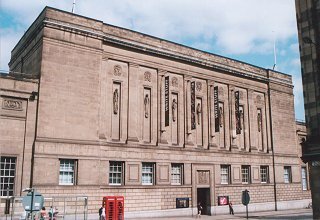
The Maughan Library, the major library in the Kings College London university system, is located on Chancery Lane on the KCL Strand Campus. Interestingly, the looks of the library are immediately deceiving; the building in which the library is located, you see, was built in 1851 as a records office. The Maughan Library has only been housed in this particular building since 2001, making the library itself rather young, especially when compared to other libraries I've visited on this trip.


The combination of the Maughan being in a relatively new space and being an academic library make it particularly interesting in terms of this month of library study. Even though the library collections cover a wide range of time periods--special collections, for example, has items from the 15th centure--the library as an operating institution is rather modern. The old building offers over 330 computer terminals for patron use; the 1000+ patron seats available in the library include group working spaces, currently becoming more and more popular in academic libraries.

The library staff are also starting to think about newer concepts like complete self-service (when it comes to checking out books and renewing items) and roving reference. I am particularly interested in the idea of librarians roving about the library space in order to meet patrons and their needs in situ, as it were. I don't know anything as far as patron feedback statistics go, but I think it would be incredibly useful to library patrons if they could encounter a librarian in the stacks when they actually need assistance, instead of always having to trek back to a centralised reference desk. A set reference desk will still be necessary, of course; but I do like the idea of changing techniques with the changing times.

We got a full, if quick, tour of most of the library spaces. I was particularly impressed with how well the Maughan has seemed to work around the obstacles of their building. Because the building is historically listed, by law the Maughan is unable to make any structural changes to the now-library. Thus, in a time when open floor plans are in vogue for library design, such a plan is architecturally impossible for the Maughan. They seem to be working quite well with what they've got, however. And, so long as students continue using the library, that's all that immediately matters.

Wednesday, July 28, 2010

Library Visit: Zoological Society of London Library

The Zoological Society of London Library is located in the ZSL office building just outside of the London Zoo itself. The library got its start as a shelf of books in the ZSL Secretary's office way back in the day; today it occupies a good-sized room all of its own, complete with reading space and some comfy chairs for informal reading.


The current library facility was last refurbished in the 1960s, so the vibe of the whole place is reminiscent of that time and place. The library collections, however, continue to be very up-to-date. In addition to continuing to hold historical monographs, pictures, and archives, the library actively collects zoological literature from the world over. Some of the zoo library-specific collections include zoological conference proceedings; zoo guides from zoos anywhere in the world; stud books, or those volumes that give the ancestry information of zoo animals to aid in breeding efforts; and books on animal husbandry.

These niche collections reflect the variety of users that the ZSL Library aims to serve. On any given day, readers may include London Zoo staff members, ZSL members, students from the nearby Institute of Zoology, and just regular curious members of the public. Anyone with an informational pursuit is welcome to use the library.

One particular project that was mentioned on our tour, and which I found interesting, is an 18-month Retrospective Book Cataloguing Project. Currently in month two of the project, the ZSL Library was able to use a grant to hire a restrospective book cataloguer specifically for this work. She's been working her way through the card catalogue that still provides search access to much of the collections, and as she catalogues each item, she also performs stock checks and weeding as necessary. I would personally find a year and a half of nothing but cataloguing tedious, but I know it needs to be done. When all is said and done, the ZSL Library's collections will be that much more accessible once all of their holdings are searchable via OPAC. I'm not entirely sure how many people without an explicit interest in things zoo and zoological would opt to search the collections this way, but even the opportunity for easier access is a positive thing!

Tuesday, July 27, 2010

Library Visit: Royal Geographical Society

Founded in 1830, the Royal Geographical Society is the UK's group of people, British and otherwise, who share an interest in things geographical: exploration, history, you name it. They've been in their current Exhibition Road location, just south of Hyde Park, since the 1912; the original 1870s building has undergone two expansions since.


The most recent expansion, completed in 2004, was undertaken as part of the RGS's "Unlocking the Archives" initiative. The necessary funds came from the Heritage Lottery Fund, which awards funds to heritage insitutions (museums, libraries, &c.) with the stipulation that the funds go toward providing comprehensive public access. For the RGS, this access largely consists of a new reading room, wherein anyone--RGS member or no--can come to peruse and learn from the Society's holdings.

The 2 million items in the collections are all geographical in nature, as may be expected: 1 million+ maps of all dates and kinds; half a million pictures, many of which are photographs; 250,000 books (40,000 of which are circulating for Society members); nearly as many items in the archives; and 1500 artifacts. The librarian who gave our RGS tour showed us a number of really interesting items from the artifacts collection. For example, I've now seen a wash basin and pitcher from the HMS Erebus; Shackleton's balaclava from his trip on Scott's Discovery; George Mallory's climbing boot, on his foot when his body was discovered on Everest; and the hats Stanley and Livingstone were wearing when they met in Africa. Pretty darn cool.

I have to say that I like the overall mentality of the RGS library as it still pertains specifically to members. While any member of the public is welcome to utilize the collections, the majority of readers are still RGS members. These members have been used to browsing the newest publications of geographical interest, and the library still serves that need: several shelves of the few open stacks in the reading room are reserved for new publications, both popular and scholarly, which might interest a member. What a great balance between getting the masses interested while still serving the patron population!

Tuesday, July 20, 2010

Library Visit: National Archives of Scotland


The National Archives of Scotland are still housed in the same building purpose-built in 1780 for storing and providing access to registers and other historical records. Actually, 1/3 of the NAS is still housed in this building; another 1/3 is located down the street in another period building, while the final 1/3 is housed in a modern purpose-built facility, complete with up-to-date storage and conservation studio.

Why might a national archive for a place the size of Scotland need to occupy three whole huge buildings? Well, the NAS is actually split into 8 total departments, each specialized in a particular type of research that can be conducted via the archive records. Do you want to track down court records of any old court case? There's a division for that. Same goes for things like tracking down Scottish wills, records of the Kirk, and family history.

Tracing one's family history, in fact, has become quite the popular pursuit as of late. The NAS had so many visitors with this particular goal that, following recent renovations, a large portion of the main building across from the Balmoral Hotel on Princes Street is now dedicated to ScotlandsPeople, an entirely computer-based series of readings rooms and records that can allow visitors to track down their lineages. According to one of the librarians who spoke during our visit, between 80 and 90% of all reference enquiries pertain to family history. The NAS was quite smart, in my opinion, to take steps to really satisfy those archives users.

Despite housing some really historical records (70 kilometres of records, to be exact, spanning from the 12th century to the present day), the NAS is also very much keeping things modern and as accessible as possible. They have a fully searchable OPAC that users can search on- and off-site, and they are taking on some really substantial digitisation efforts. One such "Virtual Volume," as the NAS calls them, is a complete digital record of Scottish wills from 1500-1901. Because the wills themselves are so fragile, now that they are digitised (of a very high quality, from what I saw), readers can view and even take home a copy without any threat to the original, which will be preserved for posterity. The NAS also has an initiative to digitise all of its Church of Scotland records. Again, these records will be more easily available without having to worry about document preservation concerns in the reading room.

All grand efforts to satistfy the twofold mission of the NAS: to preserve, protect, and promote their national records; and to make them accessible to educate, inform, and engage readers.

Library Visit: Dunfermline Carnegie Library


Back in 1881, in his Scottish hometown of Dunfermline in Fife, Andrew Carnegie gave £8,000 for the building and stocking of the first of what would come to be many Carnegie libraries. The Dunfermline Carnegie Library officially opened in 1883; on its first day of operations, every single item in stock was checked out. Every. Single. Book.

The public library is still very much alive and kicking to this day. In fact, it serves more than perhaps the average public library, and has a number of special divisions to best meet the varied needs of a wide variety of patrons. One particularly noteworthy division is the Family and Local History room, wherein patrons wishing to learn more about Dunfermline-related historical topics can come for expert advice on conducting their research. The librarians in this room have everything, from microfilm of newspapers and copies of local records dating quite far back to binders of indexed images and commonplace books of sorts that act as primers to the subjects within the library. Our tour librarian informed us that many library visitors are actually out-of-country visitors looking to track down their family histories; the library is well equiped to serve them.

The Dunfermline Carnegie Library also boasts a rather impressive Special Collections room, which houses three distinguished collections--including a large Robert Burns collection second only to the one in the poet's home town. All of these items are available for exhibit and for patron perusal, a huge benefit for the library and its users. These Special Collections are housed in a separate room just off the original lending library in the space, which is now used as the reference library. Its walls are covered in open-access books, and tables and PCs fill the floor space. A very good library feeling, indeed.

The general collections of the library were pretty impressive, with the bookshelves in a round orientation circling the enquiries and issues desk. Perhaps most interesting and out of the usual way of things in the general collections room was that the bookshelves are all original to the room. I had never seen such intricately-carved bookshelves before, complete with gargoyles atop some of them.

Children's was impressive, bright, and sunny as well. Usefully for children, the non-fiction children's books were not organised according to Dewey Decimal order but instead according to broad subjects--Earth and Space, Famous People, Foreign Places--that better mimic how children think. I've really been surprised at the number of libraries I've visited this trip that have forgone Dewey for their own schemes; perhaps we're missing some key thought process in the US.

Two of my favourite aspects of the Dunfermline Carnegie Library operation:
1) They have a Book Prescription Service, wherein a person is prescribed a book by a doctor the same way they might be prescribed a medication. These prescribed books run the gamut from books about diseases to more psychosomatic and social topics, like divorce and abuse. The library is getting ready to expand the program to children's.
2) They are currently in the fundraising stages of adding on to the library space. The new space would allow for a museum and art gallery to be connected to the library proper, essentially following the "discovery centre" movement that I'm growing more interested in by the day.
All in all, awesome library. I would be more than happy to work there should any openings appear!

Monday, July 19, 2010

Library Visit: Central Library Edinburgh


Central Library Edinburgh is the main hub of the 26-branch Edinburgh City Libraries system. As the centre of all things libraries in the area, Central Library runs several of the main initiatives associated with pretty much any major public library these days, and some initiatives that are more cutting-edge.

One such necessary iniative is what is professionall called "Web 2.0"--that is, using the internet as another space for interaction between, in this case, library and patrons. Central Library's goal in their particular implementation of of Web 2.0 is twofold: to give greater access to library patrons on a 24/7, off-site basis, and to increase the public image of the library. They are accomplishing these goals by offering a variety of online resources going above and beyond the average library's online databases. They also offer one of the largest collections of e-books, and they have a digital image collection numbering in the thousands that pertains primarily to Edinburgh. They're also blogging, tweeting, and using other social networks to get people involved in their library.

Another major initiative has to do with conservation and special collections. While the general mission of Central Library is the same as most public libraries--to give patrons access to the kinds of information they need and want--Central Library has one added dimension: they are a definitive resource of information about Edinburgh, and on a slightly smaller scale on Scotland as a whole and Scots in general. As such, they have a variety of resources on these topics spanning from the 15th century to the present, including some unique collections. These types of materials require special care and, even though they are non-circulating items, they are items available to any library user. These items do get used, and so the library must and does devote resources to maintaining the physical integrity of the items.

Two librarians chatted with our library group about one initiative--and in their case, department--that I found extremely refreshing and extremely necessary for public libraries: reader development. One of the librarians summed up reader development with the neat phrase "the right book for the right person at the right time"; reader development is all about making sure patrons are able to access the resources they want, not just the ones someone else thinks they should read. One practical implementation of this policy is that Central Library maintains book club sets of books, multiple volumes of one title that local book clubs can check out to use in their clubs. Hand in hand with these physical resources is an initiative to have book groups and discussions meeting in the library itself.

The other reader development librarian cleverly quoted his author friend in saying that reader development is also about promoting leisure reading: "we've made books like spinach, when we need to make them like cake." In other words, instead of telling patrons--teens in particular--that they should read because it's good for them, we should be showing them that reading is a fun treat. Central Library and some of their outreach partners have had some success in spreading this mentality among Edinburgh teens by having author events aimed directly at teens; these events show teens that the process of writing a book was enjoyable for the author, so the process of reading it will probably be enjoyable as well. What a great philosophy for getting more people to read!

Our visit to Central Library ended with a quick but thorough tour of the library proper. They boast a beautiful and impressive top-floor, rotunda-ceilinged reference section, complete with quiet, wi-fi, and plenty of tables. They also have an extremely well-stocked fine arts library; a photography-prone friend was particularly in awe of their extensive photography book holdings. Central Library also has separate Edinburgh and Scotland rooms, wherein patrons can access the wealths of information that the library maintains on both subjects. Mind, all of these four collections I've just mentioned are non-circulating.

There is a lending section available as soon as one walks into the library. While the lending library shelves are entirely full, the holdings seem perhaps less impressive compared to other public libraries. This sparsely-resourced look is an illusion, however, because at any given time the majority of the library's circulating titles are checked out; patrons can access the full holdings online and place holds from there. Also circulating are the small children's library and a good-sized music library, both of which have a particularly Scottish bent. I really liked that in addition to supplying general interest items that seem to be in every public library, Central Library has a variety of resources that show Scottish pride. This quality also makes the library a good research point for visitors.

Two closing facts about Central Library Edinburgh: 1) They have over 1 million items, 60,000 of which are on open shelves for patron perusal; everything else is visible on the catalogue but needs to be fetched by a staff member. 2) They use the Library of Congress classification scheme, perhaps something of an anomaly both for public libraries and for UK libraries, but a choice that reflects the breadth of the collections.

*photo courtesy of Edinburgh Scotland

Library Visit: National Library of Scotland


The National Library of Scotland, located just off the Royal Mile in Old Town Edinburgh, is one of six legal deposit libraries in the UK. Since they receive a copy, or at least have the option of receiving a copy, of everything that is published in the UK, they are a tremendous resource for scholars and inquisitive people of all types. Since the collections also have a Scottish bent, they also make a great resource for anything Scottish.

Held among the 15 floors of the main building and an off-site storage facility are the library's 14 million plus books and manuscripts; 2 million atlases and maps; 300,000 music scores; 32,000 films and videos, including the entirety of the Scottish Screen Archive; and 25,000 newspaper and magazine titles. Even with all those items currently in the library collection, the NLS still receives around 6,000 new items every week. (Poor cataloguers!)

Like the other research libraries I've seen on this UK library excursion, NLS readers must register with the library to get a reader's card. None of the items in the collection are available to be checked out of the library; rather, any research needs to be done in one of the library's reading rooms. Alos like with the other research libraries I've seen, the benefits of working with some really unique materials far outweighs the potential obstacle of only being able to work in the library proper.

What I most enjoyed about my short visit to the NLS was the variety and depth of their exhibits in their public visitors centre. One special exhibit going on now, in honor of the just-finished British Open at St. Andrews, is about golf and its history, first in Scotland and then the world. The number of artifacts they have pertaining to golf was really astounding to me; but maybe that's just because I don't really like golf too much...

A more permanent exhibit has to do with the personal papers of John Murray, otherwise known as the complete everything having to do with the seven generations of John Murrays who published some of the greatest works of literature and science, &c., from their London publishing house. The entire papers are owned by the NLS, and they have taken it upon themselves to make public some of the wonderful things contained within them. The exhibit currently covers such Murray authors as Lord Byron, Sir Walter Scott, Charles Darwin, and Jane Austen. I really love that a research library such as the NLS, which could seem elite and cold because of its readers-only policy, is taking the time and resources to share some of their gems with the general public. And I'd be saying that even if one of the subjects on exhibit didn't include Jane Austen.

*above photo courtesy of Scottish Places

Friday, July 16, 2010

Library Visit: The Bodleian Library

Oxford University, the oldest university in the UK, names its official opening date as 1201--that's when the university first stated its statutes and elected its first chancellor. For those of you who don't know, Oxford operates on the collegiate system; that is, the University itself is made up of different, academically-independent colleges. Students wishing to "go to Oxford" must apply to a specific college, as they will be a student at that college specifically, not at Oxford as a whole.

Because of this collegiate system, wherein students formerly only studied at their own college,
the college libraries throughout Oxford are effectively older than what is now the university library at Oxford, the Bodleian. (However, what with the wonders of OPACs, the materials accessible via college libraries are catalogued in the Bodleian's overarching system.)

The first university library at Oxford actually began with the donation of Duke Humfrey's library upon that mans death--this first library officially opened in 1488. Beginning in 1598, however, Thomas Bodley began to make arrangements to donate his own substantial library to the university library. It was this gift of around 14,000 items that allowed the library to reopen in 1602 under its new and lasting name.


Bodley did a lot for his library. In 1602, he hired a librarian to tend the books (the Library maintains a staff position called "Bodley's librarian" to this day). In 1605, he commissioned the creation of the first catalogue of the library's holdings. Then, in 1610, he negotiated a copyright agreement with a stationer that allowed the library to receive, free of charge, a copy of everything published in the UK. Today the Bodleian still reserves the right to a copy of everything, although they actually only receive items that they request.

Bodley's library is still kept in the room purpose-built to house it, and the books are on the shelves in the same order and fashion in which Bodley and his first librarian left them. These resources are available for reader use upon request, and according to the tour guide they do get requested. Duke Humfrey's library sits just off the Bodley Library room; his books line the shelves there, and reading tables are available for reader use as well. (Fun fact: Duke Humfrey's Library is used as the Hogwarts Library in the Harry Potter films.) Readers can sit in this or other rooms, including the reading room in the oft-pictured Radcliffe Camera building:


Today the Bodleian acquires around 5,000 new items every week. They have a total of more than 11 million items, more than half of which have to be stored off-site at least until planned expansions can be built. The end result as far as on-site book storage goes is that books have taken up pretty much every space they can. They line walls and stack in the original Bodleian Library building, and they fill high-density shelves on 11 floors of a newer library building (1933) just across the street. Because all of these library stacks are closed and readers will never be browsing the shelves, new materials are shelved in order of item receipt--really, all that matters is that the books have a definite findable location on a library shelf, not that they be in any sort of subject organisation.

To move requested items from the stacks to where they will be read by readers, the Library employs a conveyor system that runs through underground tunnels. Our tour took us along part of its path, and it really does seem fantastical that the original conveyor system is still in use (albeit it will undergo enhancements soon).

Perhaps what I most like about the Bodleian, aside from its obvious beauty and history, is that the library is available to all scholars, not just Oxford students. Open accessibility was a strict requirement of Bodley for his library--he understood that knowledge is not just for a few, but for all.

Thursday, July 15, 2010

Library Visit: The National Art Library

The National Art Library, housed among the many wonders of the V&A, serves in all ways to serve the museum's broad subject scope of art and aesthetics. Books, journals, and other materials such as sales catalogues and trade literature make up the art and design collections, with occasional other gems (e.g. Shakespeare First Folio, Dickens manuscripts, DaVinci notebooks) acquired through the bequests of two "gentlemen's libraries," as one librarian put it. I don't suppose you would argue that a First Folio isn't really in your collection areas when it's offered to you.


The public are welcome to, and do, use the library when they wish. There are two main reading rooms within the National Art Library within which readers can go about their work. The many volumes lining these reading room shelves are the reference works of the collection; library visitors can pull them off the shelves themselves as needed without having to formally request them. Formal requests, on the other hand, are retrieved by staff once every hour. Staff will go through the three floors and several rooms of book stacks to retrieve whatever it is the readers need; I really had to wonder at the variety of places all the books are located! Another librarian commented that, while the National Art Library is lucky insofar as it has all of its resources on-site for easy retrieval, they are running out of shelf space. Thus books, books everywhere.

Most of the 60 library staff members actually work behind the scenes, doing things like managing the £500,000 acquisitions budget or cataloguing the new materials the library is always receiving. Only a small portion of the librarians actually work out in the public reading rooms, where they interact directly with library readers.

Perhaps the fact that I found most interesting about the National Art Library during our tour is that library staff do not just field all library reader enquiries--they actually field all enquiries from the entire museum, be they from the public or the staff. As a librarian, I would imagine that this both increases your workload and diversifies it. After all, if you're trying to assist both amateurs and experts, the variety of queries you'll field would seem to be very great. I like the idea of variety in library work and reference questions. I also love the V&A, so perhaps there is more to attract me to this sort of library than I had originally thought.

Library Visit: Stratford-Upon-Avon Library and Information Centre

The Stratford-Upon-Avon Library and Information Centre is a quaint little two-floor operation situated on a pedestrian street just next to Shakespeare's Birthplace (one of the many Shakespeare-related attractions in the town). I poked about the main sections of the library for a bit--the upstairs is comprised of the non-fiction collection, the main enquiries desk, and a small local/family history side room, while the fiction, large print and audio book, dvd, and children's sections are located on the ground floor.


Surprise, surprise, I spent most of my time in the Children's Library! This children's section was rather among the smaller I've seen so far this trip, but they still have what seem to be the requisite supplies--two PCs for patron use, as well as a small padded-chaired reading area and a child-sized table--and genres. I found this library's method of helping children and parents choose reading level-appropriate particularly interesting: they had divided what would be considered early readers into three levels, "hop," "skip," and "jump," which become more advanced in that order. Way to make the idea of reading even a bit more appealing to perhaps reluctant new readers!

For a smaller library, too, I was rather impressed with the regular events the Children's Library puts on. They do a Rhyme Time for 0-2s every other week, and a program for 2-5s every month. It also appears as though the library boosts its offerings for the summer time, both in terms of providing activities for children out of school and in terms of the UK-wide summer reading initiative. The local events catalogue lists a number of space-themed events that will be going on in and around the library in connection with this summer's Space Hop program. The library also advertised homework support during the academic terms.

I spoke to a librarian at this branch, and he said that in general programs are very well attended. In particular, even the smallest library branches in the county get between 100 and 150 children participating in the summer reading program every summer. I was happy to see that Stratford-Upon-Avon is more than just a tourist destination; they have an information-seeking public to satisfy as well!

Wednesday, July 14, 2010

Library Visit: The London Library

Founded in 1841 by one Thomas Carlisle, who was tired of having to go to the reference library at the British Museum every time he wanted to read about something, and not being able to take those books home with him for more convenient perusal, the London Library is the world's largest independent library. What makes them independent is that they are entirely financed via member subscription fees; that is, annual use of the library is dependent upon paying a fee.


While it may seem extravagent to pay to use a library when London boasts a number of free public libraries, after our tour of the library the reasons for membership really presented themselves. First of all, because members directly pay for the library and library staff, there is no unanswerable question at the enquiries desk. Whereas in a public or even academic library setting a reference question may lead to an ultimate answer of, "I'm sorry, we don't have that item/information/other thing you want," no such thing ever happens at the London Library. As one of our tour guides put it, five star service is the bare minimum of what is required of staff when working with members.

Also of extreme benefit to the library members are the large number of reading spaces available within the library itself. While 97% of the library collections can be checked out of the library building, it was apparent that many members enjoy doing their work and research within the library itself. There are a number and variety of reading rooms, running the gamut from entirely interior, buried-in-the-stacks reading places to bathed-in-natural-light newer rooms. Many members who are writers actually use the library as their place of work; since they use the materials housed in the library for their work, and they pay for the privilege of being in the library, they use the library space on a day-to-day and convenient basis.


The collections of the London Library are all print resources; mostly books, but the library also has over 800 current periodicals and back holdings of many others. The 1,000,000+ item collection grows by between 8,000-10,000 items per year, adding to subject areas largely within the humanities but also spanning into other areas as best benefit the library's purpose and members. All of these resources are classified using a unique system created by former library Sir Charles Hagberg Wright. Using a rational system of broad subject areas like Art, History, Literature, and Science & Miscellaneous, books within these areas are further divided into more specific subject headings (Painting, European War I, Classics, Death, &c.). The result is that the items are organised on the shelves in very specific ways, allowing better retrieval rates--and better browsing!--of the collections.

About 3% of the items held by the London Library are considered rare or fragile and so are not available for circulation. They are still available for member use, however, within the library itself. These and other materials deemed in need are given top-notch preservation care, as the overall goal of the library is to retain items for use by members whenever they might desire them. As such, the library never weeds from its collection; that book on that subject from 1800 will be right next to the more modern book on that same subject on the library shelves, available for use by intellectually curious members. Quite a good MO for a library, if you ask me!
*top photo courtesy of the London Library

Library Visit: Lambeth Palace Library

Lambeth Palace has for centuries been the London home of Archbishops of Canterbury, the head of the Church in, and since the Reformation of, England. In 1610, with the death and bequest of Archbishop Richard Bancroft, the Lambeth Palace Library was created to be a permanent resource to Archbishops of Canterbury in matters ecclesiastical and otherwise. With the patronage of then-King James I, the library really got a solid start.


Fast-forward to 1648 and the Commonwealth Period in England, when that royal kill-joy Oliver Cromwell found pretty much every institution ever associated with the monarchy offensive and dangerous. Cromwell wanted to use Lambeth Palace as a prison, and he did; luckily, with the forethought of palace residents and some speedy legistlation on part of Parliament, the then Archbishop was allowed to send all of the Lambeth Palace Library to Cambridge University for safe-keeping. And a very good thing they did, too, as there are some magnificent treasures in the collection.

Aside from the almost requisite Gutenberg Bible, the Lambeth Palace Library also boasts Henry III's Book of Hours; the death warrant for the execution of Mary, Queen of Scots, signed by Elizabeth I; Elizabeth I's own prayer book; Catherine of Aragon, and then her daughter Mary Tudor's, own highly decorated bible; and plenty of rare and unique manuscripts and printed books on subjects of theology, history, geography, and others.

In the twentieth century, the Lambeth Palace Library wrote its official purpose: to be the main special library on the history and affairs of the Church of England, including being a record repository for the papers of all Archbishops of Canterbury. Thus any person wanting to do serious research about the Church of England, a particular Archbishop of Canterbury, or anything remotely connected to those subjects will find it necessary to visit the Lambeth Palace Library and their reading room, where the perusal of these important documents is freely allowed.

Since 1964, the Library has benefitted from the work of the Friends of Lambeth Palace Library, who do significant fundraising and acquisitions work that continues to ensure the library holds some of the best resources available. The library has also recently begun to undertake some digitisation projects with the hopes of making some of the most difficult to find, most fragile, and most useful documents more readily available to those who might benefit from them. All in the name of serving the library's mission: to preserve, develop, and promote access to all of their holdings.
*above image courtesy of Renaissance Library

Monday, July 12, 2010

Library Visit: The E-Library and Caird Library at the National Maritime Museum, Greenwich


The National Maritime Museum is situated just a bit off of the Thames in Greenwich, just east of London, on property that used to house the Royal Naval College. The museum itself and its library have been open since 1937, when they were first made public through the devotion of benefactor Sir James Caird. Thus, the Caird Library.

Being situated in Greenwich within close proximity of things both naval and astronomical, it should come as no surprise that some of the major areas of collections within the library itself are navigation, astronomy, exploration, naval architecture, and both the Merchant and Royal Navies. Also significant parts of the collections are immigration (Britain's an island, thus immigrants come by water...) and piracy. The types of resources that the library maintains within these subject areas run the gamut from manuscripts and rare books and materials to charts, journals, ephemera, and archival documents.

(They really do have a variety of things. As a part of our tour, two librarians showed us a book of United States Navy codes won in a naval battle years ago, a medical guidebook that witnessed the mutiny on the Bounty, and what is essentially a Dear Jane letter from Nelson to his wife.)

Being a publicly-funded library, the Caird currently does not really have the funds to acquire materials outside of those that they can add to their "working" collection; that is, the resources that are there specifically to be used and provide up-to-date information. Really, most of the holdings within the library itself can be constituted roughly as "working"; these are the items from 1850 to the present that, from my understanding, form the main and reference aspects of the collection. The rare and unique materials are something else entirely.

The rest of the collections are housed off-site in one of two different locations, which means that requests for items may not be satisfied for four or five days. That, however, is under the current manual system. The Museum is in the process of constructing a new library area behind the exhibitions building; this area would hold all of the library's resources, reducing retrieval times to about one hour. As this move is made, the library plans to go digital in terms of processing and tracking retrievals, helping to speed along the process as well.

While preparing for this renovation, the Caird Library is only open three days each week instead of the usual six. As a result, they are seeing fewer in-person library users and more written enquiries. Happily, the E-Library, which is currently housed in a more visible museum area, is open at any time the Museum is. The E-Library consists of about eight computer terminals that are stocked with a number of relevant databases and the library catalogue, allowing visitors to the E-Library to at least get a start on their research if they are unable to enter the Caird. This E-Library is also fit up as a sort of library reception area, with comfortable seating and an information desk. It was too early in the morning to be busy when our tour took place, but I would imagine the E-Library proves to be a very useful resource to museum visitors.

Friday, July 9, 2010

Library Visit: Winchester Discovery Centre

In 2007, the Winchester Public Library...


...underwent a complete overhaul.

Now the Winchester Discovery Centre, it still serves the same function as pretty much any other public library. Except, arguably, it does so with more style. Walk into the Discovery Centre, and you're immediately struck by the library-in-the-round atmosphere. The general collections are housed on the ground and upper floors of the circular main room, shelves lining the walls and radiating from the centre like rays of sunshine. The space is white with literary embellishment, adding such a comfortable feel to the space.

Attached to this central area housing most of the general collections are spaces that were added on with the renovation: namely, a city space for community exhibits; a gallery; and a large cafe area, within which are located both plenty of tables for eating and plenty more shelves of the novels collection for reading. For such a relatively small public library--the collections fit neatly into the equivalent of three good-sized rooms--I was impressed by the variety with the collections. For instance, the shelves boast a good number of musical scores and play scripts, ostensibly for use by community groups. I was also impressed by the general organization of the collections: all general collections matierals were placed on very neat shelves, and each of the ray-of-sunshine shelves were boldly and clearly labeled by genre. Each of these genre shelves, additionally, was at least 25% display space.


And the children's department? Oh, it may just be my favorite of any I've yet seen! The fun wall designs of the main part of the library continue here, albeit with a definite kiddie bent:


The children's collections contain everything from parent resources, board and picture books, and early readers to a substantial collection of juvenile and young teen fiction, audiobooks, and nonfiction. The nonfiction collections are actually housed in a sort of round information circle, wherein the bookshelves hug a four-computer information station. Displays were plentiful and useful, placed at a very good level for children's points of view.


From what I could gather via programs fliers and bulletins, the Discovery Centre puts on a number of programs and events for their child patrons. In addition to general rhyme times and story hours, they offer age-specific events (a "buggy day" of baby-friendly activities) and events on themes (jungle, cinema, &c.). While the Discovery Centre doesn't participate in that UK-wide summer reading iniative I've mentioned before, they have definitely boosted their program offerings for the duration of the summer.

Trust me, if I were a kid in Hampshire, I would definitely want to be in this children's department.

Library Visit: Morley Library at Winchester Cathedral


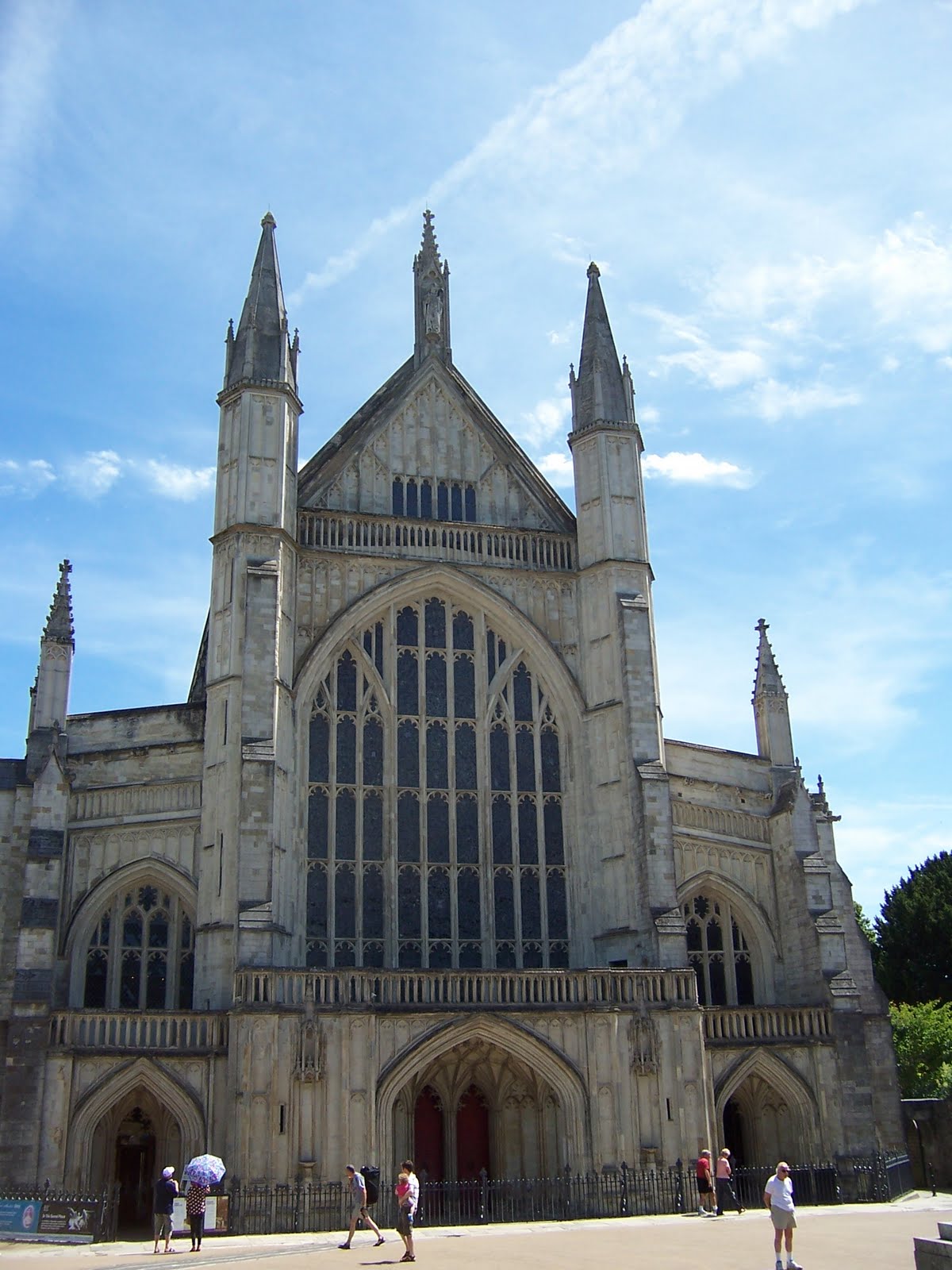
Up a flight of creaky wooden steps from the main floor of Winchester Cathedral is the entrance to the Morley Library. This gem of a room and collection is all thanks to one former Bishop of Winchester, George Morley, who died in 1684.

Morley lived through the English Civil War in the 17th century. In fact, as a friend to exiled King Charles II, Morley too kept himself occupied outside of England during this time. It was during this stint abroad that Morley began to so voraciously collect important books at the time. He collected items largely of an ecclesiastical nature, although his collection reflects his additional scholarly interests in geography, astronomy, history, and herbology.

Fast forward to the end of the interregnum, and Charles II is restored to the throne. He makes Morley Bishop of Winchester, foretelling the future existence of the Morley Library. As Bishop, Morley did not live in Winchester itself; he was actually quite a ways away in a palace to call his own. Knowing the value of his library, however, in 1668 he told his fellow clergymen that upon his death he would bequeath his collections to the Cathedral. They outfitted a room to be a library, and on Morley's death in 1684, his books started to be transported to the room in which they are now kept and displayed.

Upon his death, Morley also left the Cathedral funds to purchase two globes. One of these is celestial, showing the constellations, and the other terrestrial, depicting the world as it was known at the time (which means California is an island and Australia has no definite eastern coastline). These globes remain on display for Cathedral visitors as well.

According to my docent, scholars who need to use the collections are usually able to do so. It seems, however, that there are very few instances in which the Morley Library holds something unique and not available at an established reading library.

Thursday, July 8, 2010

Library Visit: The British Library

Oh, the British Library. By far one of my favorite places in London (how can a person, let alone a bibliophile, not like such a place as this?). I've had the pleasure of visiting the British Library and its treasures before, but I assure you, never quite like today.


The British Library, as I mentioned before, was once a part of the British Museum. The current (marvelously-designed) building adjacent to King's Cross St. Pancras opened in 1997, at which point all readers wishing to look at materials held by this library started visiting the same building I toured. The British Library is the UK's legal deposit library, meaning that by law it must acquire and keep at least one copy of everything published in the UK. That's quite a lot: right now the collection holds over 200 million items, with the collection growing by 8,000 items per day on average.

How does a library hold such a massive collection, you ask? They hold about half of their materials in the library building itself. In fact, they've got storage space equivalent to an 8-story building reaching 25 metres (82 feet) underground. Any of these items that are requested by library readers for perusal in one of the library's reading rooms are brought up to the main library levels via an automated material retrieval system that is made up of over a mile of conveyor belts. All items, and the bins in which they are transported, have barcodes unique to each request, allowing the whole automation thing to work. It works so well, in fact, that my tour guide specifically pointed out that the library has never lost an item via the system. Rare and delicate materials are delivered by hand, the old-fashioned way, in case you were worried about that.

The other half of the library collections is housed off-site in Yorkshire. Any item held in Yorkshire requested by a library reader will take two days' transit to get to the library itself; readers, plan ahead.

A prized "small" portion of the British Library's holdings, the original collection of around 65,000 volumes amassed by King George III, is housed on-site in a veritable tower fortress of rare books. This collection, officially called the King's Library but more grandiosely called the Jewel in the Crown of the British Library, is contained in a six-story structure sitting in the middle of the public area of the library space. The walls are glass, allowing the collection to be visible at all times. These items, though rare and prized, are available for readers' use just the same as everything else the library holds; about 70 of these items are requested any given day.


Readers at the British Library are those who need to use the collections for some specific purpose--emphasis on need. Not just anyone can get a reader's card; one needs to be a scholar or someone with proof of specific interest in a particular work or works, and one can only view these items once having exhausted all other possible means of viewing them in other collections. These strict qualifications result directly from the British Library's number one concern: the security of the collections. Like pretty much any library, rare books or no, they've had ocassional security issues in the past. No one can blame them for putting measures in place to prevent any in the future. One specific measure, not at all uncommon for rare books libraries, is that the British Library maintains a record of every item requested and viewed by every reader. Happily, this precaution serves both library security and the forgetful reader who can't recall the exact volume he read, oh, about six months ago...

My favorite part of this British Library tour? The Readers' Terrace. On the third floor of the library, in a public space that seems very sparsely used, there is a small room in which readers (and the public, presumably) can have a snack they've brought from home. Right outside the doors of that space is a lovely deck space, covered in blooming greenery, where library visitors can get a breath of fresh air before returning to their studies. Very comfortable indeed.


It was no secret that I was a fan of the British Library before this visit, but now that I know some of the finer details of its history, operation, and layout, I must say I'm an even bigger fan than before!

Wednesday, July 7, 2010

Library Visit: The Paul Hamlyn and Central Libraries at the British Museum

It makes sense for a museum to have lots of books. Especially a museum like the British Museum, arguably one of the best museums in the world. When the British Museum opened in 1753, it was both the first national museum and the first public library in Britain.


Up until the building of a separate British Library facility in the 1970s, the British Museum housed the complete national library of the UK. Today, each of the museum's eight departments maintain individual libraries. Additionally, the staff of the museum and the public have access to the approximately 50,000 volumes contained in the museum's Paul Hamlyn and Central Libraries.

The tradition of having a substantial library collection at the museum is most notably talked about in what is now called the Enlightenment Gallery. Originally, these rooms held the books of George III that were donated to the Museum by his son George IV. Today the very same shelves are filled with books on permanent loan from the House of Commons; all of these volumes are from that legislative body's rare books collection.

To get to the Paul Hamlyn Library, and any museum visitor can, one need only walk into the museum; turn right into the finer-things gift shop; walk through to the small, square exhibition room; and turn right into the smallish library space. This room holds but a portion of the library's accessible reference collection. It also, much to my happiness, includes a corner designated for children and family visitors to the museum library. Here they provide seven half shelves of children's materials pertaining to subjects within the museum, as well as teachers' guides. Want to look at one of the books held by the library? Sit down at one of the library computer desks, search the library catalogue, and write down what you'd like to see; a member of staff would be happy to get you your requested item for in-library perusal.

What if you wanted to get to the Central Library, the portion of the library that loans items to museum staff and houses the huge portion of the collection not on the shelves in the Paul Hamlyn room? First of all, the Central Library isn't on a museum map; you need to be museum staff to access it. But, if you happen to be on a very lucky tour, you may just be led through a secret door in the museum...


...and into the rooms of shelves dating to 1816. These shelves are full of books old and modern; periodicals about library science and museum studies; old British Museum posters and postcards. A few examples of what I saw were huge, bound facsimiles of Egyptian Books of the Dead, currently in preparation for an upcoming exhibit; exhibit advertisements that were hung in the tube in the 1930s; and books written by famous authors who were once readers at the British Library when it was housed in the Museum. Central Library really is a hidden treasure library within a reference library within a museum.

On a more modern, less hidden-door note, the Paul Hamlyn Library does a lot of outreach to both museum patrons and potential museum patrons. I particularly liked their initiatives to get child visitors to the Museum more interested and involved in what they see in the galleries. They have reading list brochures for the already-interested child; themed scavenger hunt-like "trails" for children to follow throughout the Museum to see highlights; and rucksacks aimed at allowing families to go more in depth into a specific department or two during their visits. Anything to get young future scholars involved!

The Library keeps nearly everything it's gifted, and in addition it continues to acquire titles on its own. As a result, it is a tremendous resource both for scholars and the average Museum visitor who might merely be curious about something he's seen or read during a visit. By the end of the month, the Library's catalogue will be accessible online; I truly hope this off-site browsing of the holdings will allow more Museum visitors to venture into this jewel of a resource room!

*exterior photo of the Museum courtesy of the British Museum

Tuesday, July 6, 2010

Library Visit: The Barbican Library

The Barbican Library is located in the Barbican Centre in central London.


The Barbican is at once a general collection, music, and children's library; each division of the library's services has its own little home, fit neatly within the unique architecture of their space in the Barbican Centre. The Barbican is meant to serve the people who live (900,000) and work (350,000) in the city square mile, the heart of London. That patron base can be further qualified as students associated with the nearby arts schools, students at day schools and nurseries in the area, and a variety of professionals.

For having such a large patron base, the Barbican Library's lack of any group meeting places presents a not insignificant problem. The library staff has resultantly tried to repurpose the traditional library spaces, but even these post somewhat of a limitation. The library was designed when solo studying was the norm; none of the study areas in the library is really set up for today's collaborative study (that's the direction most libraries are going in the US, especially academic libraries).

However, the Barbican and its staff are certainly doing what they can to modernize and better serve their patron base. They've installed several very cool self-issue machines (translation=self-checkout) that utilize RFID technology, and they've begun to focus a lot of their efforts into online resources. The Barbican still has a top-notch reference section--as per my guide Geraldine, its reference collection is second only to Guildhall Library, which is non-circulating reference only--but they're moving toward encouraging and educating patrons to use the plethora of online reference tools made available to them.

I was also very impressed with the Barbican's "quick-pick" displays:


I know at the library where I volunteer, displaying books can sometimes be a bit of a challenge: there aren't necessarily many centrally-located places for themed displays, displayed books are checked out so frequently and so displays look barren without near-constant replenishment, &c. The Barbican uses their displays to conincide with monthly themes, usually pertaining to some specific needs, interests, or events in their community.

The Barbican also boasts an enviable music library with substantial collections of CDs, musical scores, and musical reference books. The music library was helpful and knowledgeable, and it was obvious that the patrons using this section during my visit were well-supplied and in good hands. But, who are we kidding; my focus on this visit was the Children's Library.


The Barbican Children's Library is meant to serve children from birth to age 14. As such, their collection is spread amongst board books, picture books, early readers, and books aimed at ages 5-10, 10+, and young teenagers. I was also happy to see a shelf of parent resources housed in the Children's Library room; from my public library experience, it is much better if parents can find the resources they need while their children browse and play, as opposed to schlepping them elsewhere in the library.

The Children's Library's 23,000+ collection largely serves class visits from local schools, nurseries, and play schools, primarily because there are relatively few children living within the library district. According to the Children's Librarian and based on statistics from the UK's Book Start program (amazing!), only about 60-70 babies are born in the area each year. True, 14 years' worth of 60-70 children adds up, but it still doesn't translate to a huge part of the children's patron base.

The librarian talked about the four main programs that the Children's Library puts on. First and foremost is Rhyme Time, a story time aimed at under 5s. The library hosts three of these story times every week. Additionally, three reading groups, ages 7-9 and 10-12, meet once a month to discuss books and socialize. A newer program is a gaming club for a war-game called Warhammer, and this program in particular draws a lot of boys into the Library (no small feat!). Finally, in true public library fashion, the Barbican Children's Library participates in the UK's summer reading iniative. The program allows children to get six prizes for reading books throughout their summer holidays; seems thoughts on motivating young readers are pretty consistent across international waters, as the program sounds a lot like those in US public libraries.

Perhaps one of the other things I really enjoyed about the Children's Library in particular was the posting of current bestsellers lists on bookshelves. I would imagine that posting current popular titles might cut down on reference questions consisting of "what's that title I read about again?" But, then, it wouldn't be a public library without a bit of that.

Library Visit: St. Paul's Cathedral Library

Ascend 142 steps, and you're on the triforium level of St. Paul's Cathedral in central London. This is a level that few people get to see, and it is home to museum-like objects--the ill-fitting lid for the baptismal font on the Cathedral floor, old (and older) lecterns, and stone blocks from the Cathedral's previous incarnations. The triforium is also home to the St. Paul's Cathedral Library.

Faciendi plures libros nulles est finis. "Of making books there is no end," reads an inscription above one of the doors on the triforium level. This floor of the Cathedral was meant for books. In fact, although the library occupies but one room, two chambers were built to hold the Cathedral library. In the second chamber, there are currently no books; just a massive oak model, the Great Model, of Sir Christopher Wren's original design for the Cathedral. Have you ever smelled a room that was so full of an oak-y scent? This model, which commands the whole space of the chamber, was built in 1673-64.


The library itself has its own distinct smell--dust, of course, but also something chemical, probably off-gasing from the pages of the old, old books. The library is made up of 54 shelves on two levels (floor and gallery); there are additional glass-doored cases of books on the library floor; and all the books are arranged by size. Like most rare books libraries and special collections, such organization demands a meticulous and dedicated librarian.

Mr. Joseph Wisdom, Librarian of St. Paul's Cathedral Library, is such a man. He joked a bit and told fascinating history of the place, but he also answered questions about who can access the library (anyone who wants to, although usually such people are scholars of some sort) and in what limited subject areas the library currently acquires new materials (the Cathedral, the Church in London, biographies of those people interred in the Cathedral). He even let us see a 13th-century psalter, beautifully illuminated; that's the oldest book in the library.

While such a library is obviously not within my particular public library or children's/young adult focus, it was fascinating to see. Beautiful and old, ornamented and, in its own way, regal. Quite a good first library visit.

*above photo courtesy of St. Paul's Cathedral